
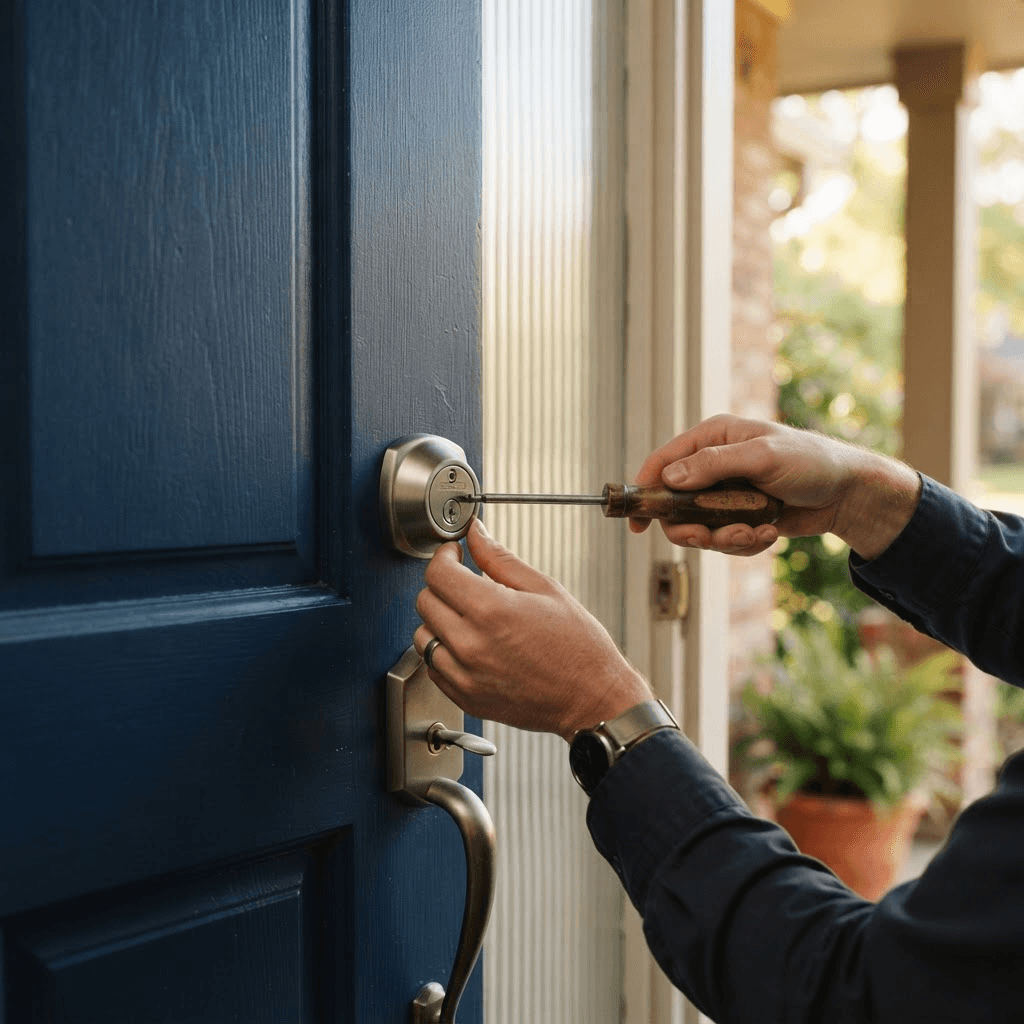
Smart locks are popular because they solve real annoyances: family members forget keys, guests need temporary access, cleaners need scheduled entry, and homeowners want to lock the door without turning around halfway down the road.
They are useful in the right place. They are also still locks mounted on real doors, which means fit, alignment, batteries, weather exposure, and backup access matter.
Where smart locks help most
Smart locks are strongest on the door your household uses every day. A keypad on the garage-entry door or front door can reduce spare-key hiding, make temporary codes easier, and help families manage access without copying more keys.
- Families with kids who forget keys.
- Homes with cleaners, pet sitters, or short-term guests.
- Owners who want keypad entry with a physical key backup.
- Doors that already close smoothly and latch cleanly.
Where a regular deadbolt may still be better
A smart lock does not fix a bad door. If the door sags, the deadbolt rubs, the strike plate is misaligned, or the frame is weak, installation can be frustrating and unreliable. A standard quality deadbolt may be the better first step until the door operates correctly.
Battery-powered locks also need maintenance. Someone has to replace batteries and know the backup plan if the electronics fail.
What to check before installation
Before buying a lock, check the door thickness, backset, bore hole size, whether the door is exposed to weather, and whether you want a keyed override. Many installation issues come from buying a lock that does not match the door or expecting the motor to overcome a poorly aligned deadbolt.
The practical recommendation
For most homes, use one smart lock on the door that benefits most from keyless entry, and keep the rest of the exterior locks simple, strong, and keyed logically. If you want one key for the remaining doors, ask about rekeying at the same time as installation.
Common Questions
Can a smart lock be keyed to match my other doors?
Some smart locks have a keyed cylinder that may be compatible with your existing keyway. A locksmith can confirm whether it can be keyed alike.
Do smart locks work on every door?
No. Door thickness, bore size, alignment, weather exposure, and hardware type all matter. The door should close and latch smoothly first.
Should I keep a physical key backup?
For many homes, yes. A keyed override or another accessible keyed door gives you a backup if batteries fail or electronics stop responding.