
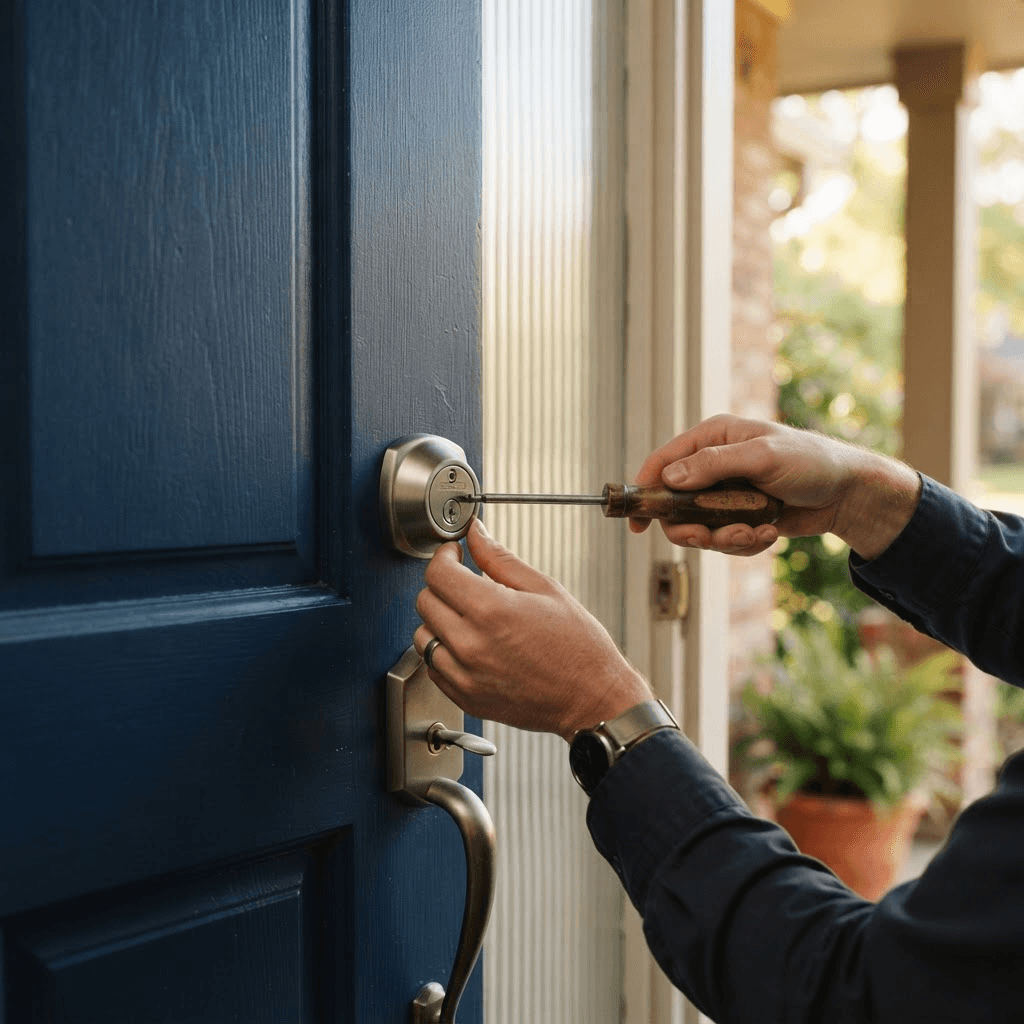
A deadbolt is one of the most basic home security upgrades, but it only works as well as the door around it. The lock, latch throw, strike plate, frame, screws, and door alignment all matter.
Before adding or replacing a deadbolt, it helps to understand what a locksmith checks and why installation quality matters as much as the hardware brand.
The door must close cleanly first
A deadbolt should extend into the strike without forcing, lifting, or pulling the door. If the door is sagging or the frame is misaligned, the bolt may rub or fail to seat fully. That creates daily frustration and weakens the benefit of the lock.
The strike plate matters
The strike plate is the metal plate on the frame that receives the bolt. A better deadbolt with a weak strike installation is still limited. Longer screws and proper alignment can help the hardware do its job more reliably.
Match the deadbolt to the door
Door thickness, bore hole size, backset, hardware finish, and whether the door already has a deadbolt prep all affect installation. Some doors are ready for a simple replacement, while others need new drilling or adjustment.
Rekeying at the same visit can simplify keys
If you are adding a new deadbolt, ask whether it can be keyed to match your existing locks. When the hardware is compatible, this can keep one key working across multiple exterior doors.
Common Questions
Can a deadbolt be added to a door that does not have one?
Often, yes, if the door and frame can accept the hardware. A locksmith can check the door thickness, backset, and frame condition.
Why is my deadbolt hard to turn?
A hard-turning deadbolt is often caused by door or strike misalignment, worn hardware, or a bolt that is not seating cleanly.
Can a new deadbolt use the same key as my other locks?
Sometimes, if the keyway and hardware are compatible. A locksmith can confirm and rekey matching locks alike.