
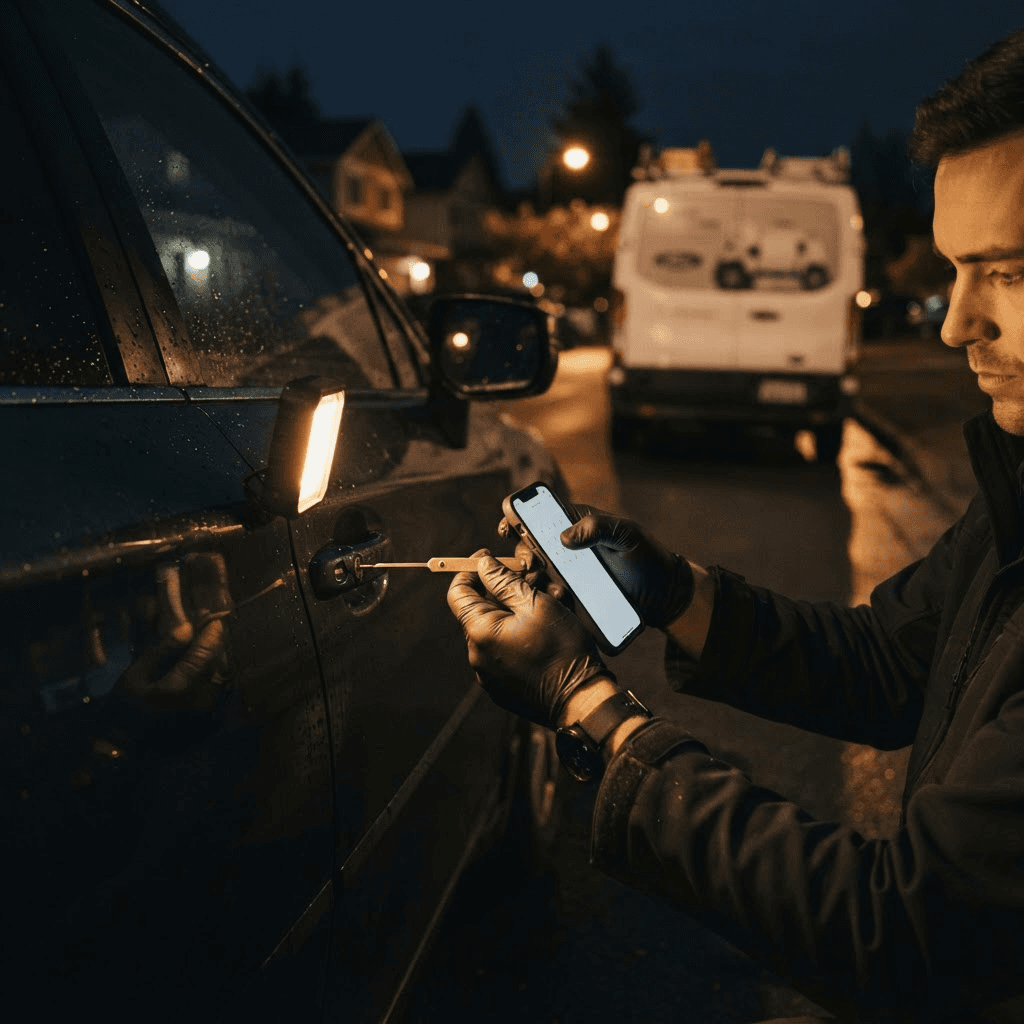
Locksmith scams work best when someone is stressed, locked out, and ready to call the first number on the screen. A low advertised price can turn into a much larger bill after a technician arrives, and a business that looks local online may actually be a distant call center using a Lawrenceville phone number or address.
A few questions before dispatch can help you identify a legitimate locksmith, understand the likely price, and avoid unnecessary damage to your home, vehicle, or business. Use this guide before an emergency when possible, or as a quick checklist while you are waiting for help.
Watch for prices that sound unrealistically low
A very small service-call price may cover only the act of sending someone to your location. The final charge can rise sharply once labor, after-hours service, hardware, or alleged special conditions are added. Ask for a realistic total or a clear price range before anyone is dispatched.
Describe the lock, door, vehicle, time of day, and whether the key is lost or locked inside. A trustworthy company should explain what could change the price and should not rely on a teaser number that has little connection to the final bill.
- Ask whether the quoted amount includes the service call and labor.
- Ask about after-hours, mileage, hardware, and programming charges.
- Request approval before any work exceeds the quoted range.
- Be cautious when the price changes dramatically without a clear reason.
Confirm who is actually coming to your location
Some listings use a local-sounding name, local phone number, or borrowed address while dispatching jobs through a remote call center. Ask for the legal business name, the technician or company that will arrive, and a callback number. Compare those details with the website and Google Business Profile you contacted.
A mobile locksmith may operate without a retail storefront, but the business identity should still be consistent. The person who arrives should be able to identify the company and explain the work before starting.
Treat immediate drilling as a warning sign
Drilling is sometimes necessary for a failed, damaged, or high-security lock, but it should not be the automatic first step for an ordinary lockout. Drilling destroys the cylinder and creates a second sale because the hardware then has to be replaced.
Before authorizing destructive entry, ask why non-destructive methods are not appropriate and what replacement hardware will cost. The technician should be able to explain the condition of the lock and get your approval before damaging it.
Ask for identification, authorization checks, and paperwork
A legitimate locksmith should care whether you are authorized to enter the property or vehicle. Be prepared to show identification, registration, a lease, or another form of proof when the situation calls for it. A company that is willing to open anything for anyone is not protecting its customers.
Before work begins, request a written estimate that identifies the company, the work, the expected charges, and any hardware being installed. After payment, keep an itemized receipt. Written records make it easier to resolve a misunderstanding and discourage surprise charges.
Check reviews for details, not just stars
A strong rating is useful, but the review details matter more. Look for a steady history of customers describing specific services, locations, technicians, communication, and pricing. Be cautious when reviews are generic, arrive in a sudden cluster, or describe services unrelated to the business.
Confirm that the website, phone number, business name, and Google profile match. Consistency across those details is a stronger trust signal than a badge or claim displayed only on the company website.
What to do if the situation feels wrong
You can stop before work begins if the arriving technician will not identify the company, refuses to explain the price, pressures you to approve drilling, or presents terms that do not match what was discussed. If you feel unsafe, move to a safe location and contact law enforcement when appropriate.
For billing or deceptive-practice concerns, keep screenshots, call records, estimates, receipts, photos, and messages. Those records can support a complaint to the Georgia Attorney General Consumer Protection Division or another appropriate consumer agency.
Common Questions
How can I tell whether a locksmith is really local?
Ask for the legal business name, callback number, and the identity of the company or technician being dispatched. Confirm that those details match the website and Google Business Profile you contacted.
Should a locksmith tell me the price before arriving?
The exact price may depend on the lock or vehicle, but the company should provide a realistic range and clearly explain service-call, after-hours, labor, hardware, and programming charges before dispatch.
Does a locksmith always need to drill a lock during a lockout?
No. Drilling can be necessary in some cases, but it should not be the automatic first step for an ordinary lockout. Ask why non-destructive entry is not appropriate before authorizing damage.
What paperwork should I receive from a locksmith?
Request a written estimate before work and an itemized receipt afterward. The paperwork should identify the business, describe the work and hardware, and show the approved charges.