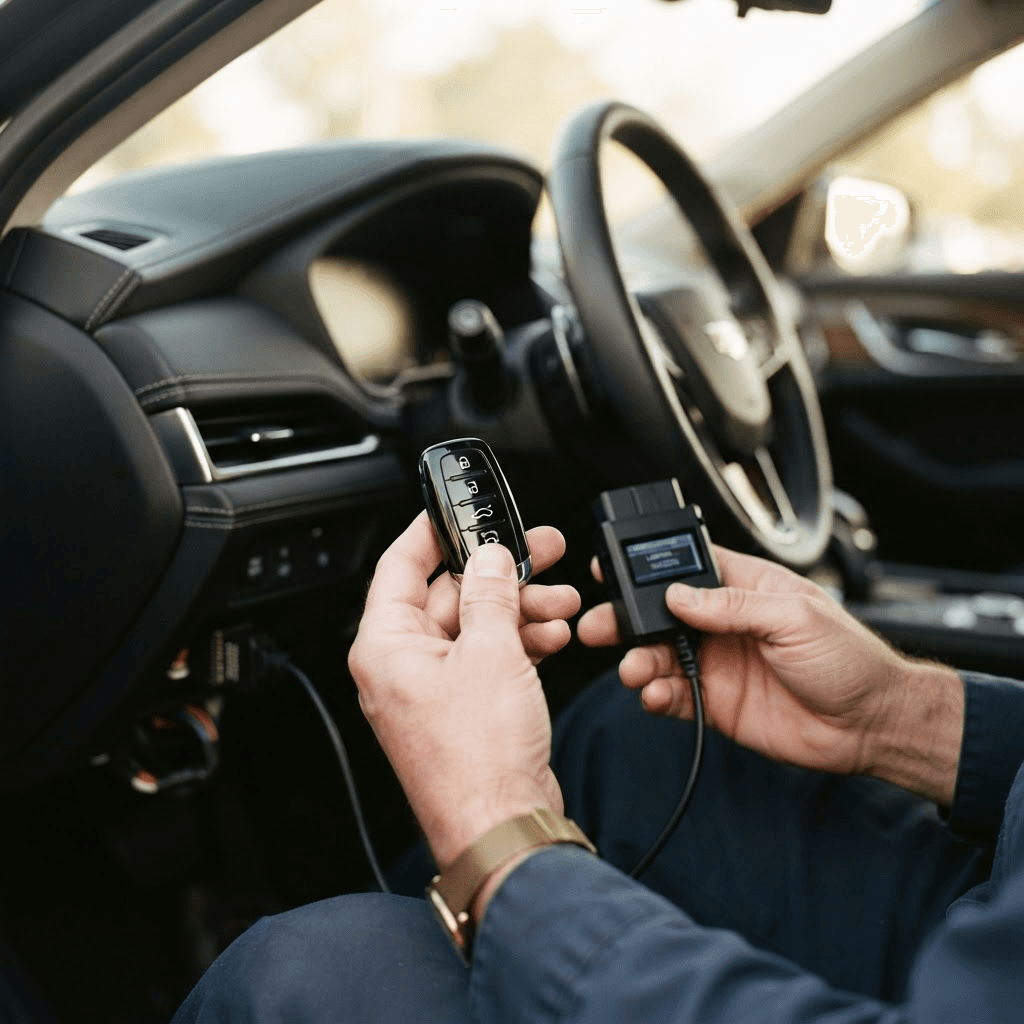
A key fob is more than a remote button pad. Depending on the vehicle, it may unlock the doors, disable the immobilizer, start the engine, open the trunk, or communicate as a proximity key. That means replacing it usually involves programming, not just buying a new shell.
This guide explains the basics so drivers know what information to have ready before calling for fob service.
Fobs and transponder keys are different but related
A transponder key contains a chip the vehicle must recognize before it starts. A key fob may control remote functions, push-to-start access, or both. Some vehicles use a separate key and remote. Others combine everything into one unit.
Programming pairs the fob to the vehicle
Programming tells the vehicle to accept the new fob as authorized. Without programming, the buttons may not work, the car may not start, or the proximity function may fail. The process depends on the vehicle security system.
Compatibility matters before dispatch
Two fobs can look similar and still be incompatible. Frequency, part number, FCC ID, vehicle year, trim, and ignition type can all matter. Calling with the exact vehicle details helps avoid the wrong part or wasted trip.
What drivers should have ready
Before scheduling key fob programming, gather the details that identify the vehicle and the key type.
- Year, make, and model.
- Whether the car is push-to-start or uses a keyed ignition.
- Whether you still have a working key or fob.
- VIN if available.
- Proof of ownership or authorization.
Common Questions
Can a locksmith program a replacement key fob?
For many vehicles, yes. Coverage depends on the year, make, model, fob type, and security system.
Will any fob that looks the same work?
No. Similar-looking fobs can use different frequencies, part numbers, or programming requirements.
Can a fob be programmed without a working key?
Sometimes, but not always. Lost-all-key situations require different tools and verification than adding a spare fob.